The Dawn of the Electrical Industry (1844-1897)
The electrical industry emerged from Samuel Morse’s 1844 telegraph message, with Pittsburgh playing a crucial early role. The city’s strategic location and industrial might made it ideal for electrical innovation. George Westinghouse, based in Pittsburgh, revolutionized power transmission through alternating current (AC), defeating Thomas Edison’s direct current system in the ‘War of Currents.’ The 1895 Niagara Falls hydroelectric plant, built by Westinghouse and Nikola Tesla, marked the true beginning of world electrification.
As the electrical industry grew, so did labor unrest. Workers faced 60-hour weeks in dangerous conditions with low pay. One in two linemen died within five years of work in the industry. In 1890, electricians meeting at the St. Louis Exposition formed the Electrical Wiremen and Lineman’s Union, No. 5221 and elected Henry Miller their first President. The following year, in 1891at their first convention in St. Louis, they adopted the name National Brotherhood of Electrical Workers and created our constitution and what is now known as “The Objects of the International Brotherhood of Electrical Workers.”
At the 1899 convention, the NBEW would become the International Brotherhood of Electrical Workers (IBEW). World War I brought prosperity as the IBEW grew from 23,500 members in 1913 to 148,072 in 1919.
OBJECTS OF THE IBEW
- To organize all workers in the entire electrical industry in the United States and Canada, including all those in public utilities and electrical manufacturing, into local unions
- To promote reasonable methods of work
- To cultivate feelings of friendship among those of our industry
- To settle all disputes between employers and employees by arbitration (if possible)
- To assist each other in sickness or distress
- To secure employment
- To reduce the hours of daily labor
- To secure adequate pay for our work
- To seek a higher and higher standard of living
- To seek security for the individual
- And, by legal and proper means, to elevate the moral, intellectual, and social conditions of our members, their families, and dependents, in the interest of a higher standard of citizenship.
The Birth and Early Years of Local 5 (1897-1920)
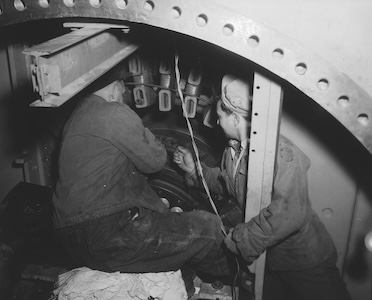
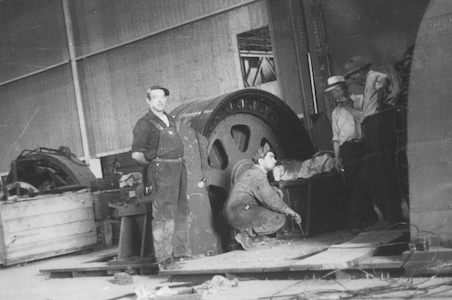
On February 17, 1897, 33 electrical workers gathered at Knights of Labor Hall in Pittsburgh to establish NBEW Local 5. The charter was granted February 25, 1897, with Theodore Bevington as president. The union quickly established itself, reporting by April 1897 that ‘the three largest jobs in this city are being done exclusively by the N.B.E.W. men.’
Early achievements included a $2.50 daily minimum wage and overtime pay. The union established agreements with contractors and coordinated with other trades. Pittsburgh hosted the 1899 convention where the NBEW became the IBEW, acknowledging international membership. Local 5 established its formal apprenticeship program in 1918 and by 1920, Local 5 achieved $1 per hour wages with 550 members.
Depression, War, and Re-Invention (1921-1990)
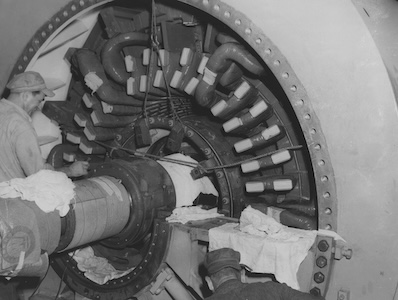
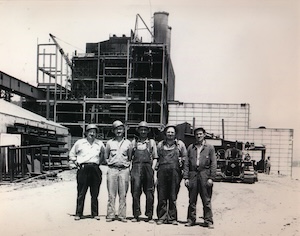
Business Manager Mike Gordan led Local 5 through the Great Depression (1929-1940). He pioneered group medical insurance and fought for members despite 37% citywide unemployment. The 1936 St. Patrick’s Day Flood paradoxically revived the local’s fortunes by creating massive electrical restoration work.
WWII brought another surge in demand. Local 5 members served overseas while those at home performed 95% of wartime electrical work in the region. Post-war prosperity under Business Manager William Shord saw the addition of Blue Cross coverage, vacation funds, and the William G. Shord Scholarship Fund in 1966. Work was abundant—travelers often outnumbered Local 5 members 2:1.
During the Civil Rights Movement of the 1960’s and 1970’s, Local 5 took deliberate, proactive steps to represent, recruit and support more minorities and women in the electrical industry.
The 1980s brought severe challenges: manufacturing job losses (Pittsburgh fell from 30th to 40th largest city), Reagan’s 1981 firing of air traffic controllers, and growing non-union competition. Business Manager Raymond Thompson led resistance through education campaigns, massive demonstrations, and community service.
Under Business Manager Joseph ‘Denny’ Miller, Local 5 innovated with the 1987 Industry Advancement Program and 1989 ERECT funds. The landmark 1989 Midfield Terminal Agreement at Pittsburgh International Airport ($1 billion

The 21st Century and Beyond
Business Managers
Michael P. Gordan
1929-1940
William G. Shord
1940-1974
Earl W. Shord
1974-1975
Raymond D. Thompson
1975-1984
Joseph D. Miller
1984-1994
John F. McIntyre
1994-1998
John Chalovich
1998-2007
Michael R. Dunleavy
2007-2021
Thomas R. McIntyre
2022-present
The new millennium brought unprecedented investment in training. In 1998, Local 5 opened a satellite training center in Clearfield County. The 2000 move to 5 Hot Metal Street provided the union hall, the offices, and the apprenticeship under one roof for the first time.
The JATC revolutionized the apprenticeship with the Electrical Construction Technology program—a partnership with Community College of Allegheny County offering associate degrees. Day school, journeyman upgrade catalogs, and cutting-edge labs (BIM, instrumentation calibration) has positioned Local 5 at the forefront of electrical training.
Since its opening, our training facility has attracted national and international attention from industry, political and business leaders and our program is the standard-bearer in electrical training.
In 2022 , Local 5 expanded the training facility in Clearfield, PA to support our program in the eastern part of our jurisdiction. By 2022, apprentice numbers had doubled from 25 years earlier to 500.
Business Manager Michael Dunleavy (2007-2021) modernized communications with online newsletters and an enhanced website. He implemented separate out-of-work books for all 22 counties and established the RENEW initiative for next-generation workers to bond through mentorship, shared experiences and community service. The 2016 Building Automation Lab kept Local 5 ahead of technological changes.
Despite challenges such as the 2008 recession and the COVID-19 pandemic creating significant unemployment, Local 5 persevered through the solidarity of our members and engagement with regional stakeholders, laying the ground work and uniquely preparing us for an unprecedented boom in the electrical industry!
Business Manager Thomas R. McIntyre continued the progress forward by establishing the Local 5 Women’s Committee and strengthening the Veteran’s Committee and RENEW program, as well as embracing other forms of communication, such as social media, to encourage more membership engagement. Local 5 modernized the apprenticeship standards from a 10,000-hour program to an 8,000-hour program, streamlining the program to meet the increasing need for electricians as the local expands into new and emerging markets. The Local revitalized its commitment to organizing to further its expansion into new markets and strengthen the existing market share, ensuring its ability to sustain growth into the future.
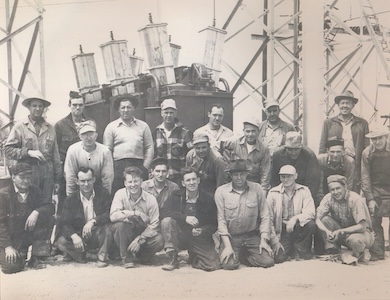
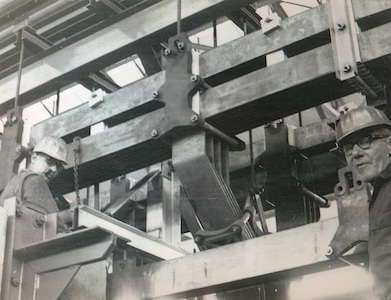
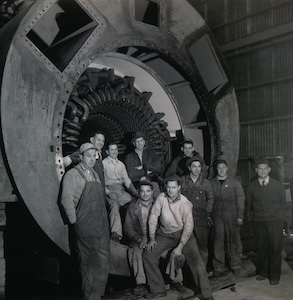
Legacy and Future
Throughout its history, Local 5 has amalgamated with multiple locals around the area and expanded its jurisdiction across western Pennsylvania.
On February 25, 2022, IBEW Local 5 celebrated 125 years of brotherhood. From 33 founding members to a regional powerhouse spanning 22 counties and 3400 members, the local has survived economic depressions, world wars, strikes, social transformation, and technological revolution.
Under Business Manager Thomas R. McIntyre’s leadership, Local 5 continues its commitment to solidarity, excellence in training, community service, and worker advocacy as we transcend into the next era in the electrical industry.
The journey from dangerous working conditions and $2.50 daily wages to comprehensive benefits, college degree programs, and cutting-edge training facilities reflects not just the local’s evolution, but how strong leadership has led us through our history and is laying the groundwork for an extremely bright future!
Amalgamations
Local 10 (Butler, PA)
Chartered November 19, 1915 | Amalgamated April 1, 2000
Local 14 (Pittsburgh, PA)
Chartered October 30, 1899 | Amalgamated October 1, 1937
Local 371 (Monessen, PA)
Chartered November 10, 1914 | Amalgamated May 15, 1943
Local 385 (Pittsburgh, PA)
Chartered January 1, 1999 | Amalgamated into Locals 5 & 459 August 1, 2012
Local 880 (Pittsburgh, PA)
Chartered January 29, 1919 | Amalgamated October 1920
Local 895 (Kittanning, PA)
Chartered September 22, 1936 | Amalgamated February 1, 1939
Local 996 (Bradford, PA)
Chartered July 21, 1919 | Amalgamated November 1, 1976
Local 1021 (Uniontown, PA)
Chartered December 16, 1919 | Amalgamated May 1, 1974
Local 1511 (Pittsburgh, PA)
Chartered May 1, 1946 | Amalgamated June 60, 1948
Local 1987 (Pittsburgh, PA)
Chartered May 1, 1957 | Amalgamated October 1, 1978
Local 2012 (Tyrone, PA)
Chartered April 1, 1958 | Amalgamated July 1, 1985